See how ZoikoSuite product direction moves from evidence to release
Explore approved public roadmap records, status definitions, release-readiness gates, dependencies, early-access pathways, and released outcomes across the ZoikoSuite platform.
Availability can vary by market, subscription, deployment, configuration, and implementation status.

Six rules that govern every public record
Each principle is testable against the record schema and the publishing workflow — not a statement of intent.
Evidence before publication
A public record requires validated problem context, an approved owner, defined scope, and publishable evidence.
Status over hype
Every item uses a defined status, a last-reviewed date, a public owner group, and a change history.
Current capability separated
Released outcomes and documentation are kept distinct from future-looking records.
Dependencies visible
Architecture, data, security, privacy, compliance, accessibility, documentation, support, migration, partner, and jurisdiction dependencies are surfaced.
Changes remain accountable
Pause, defer, rescope, release, and withdrawal events stay visible where publication is appropriate.
Feedback without false voting
Customer context contributes evidence, but public popularity does not create a delivery promise.
Nine statuses, each with a definition and entry criteria
The table below is the canonical view. The chips are supplemental and filter the board — they do not encode progress.
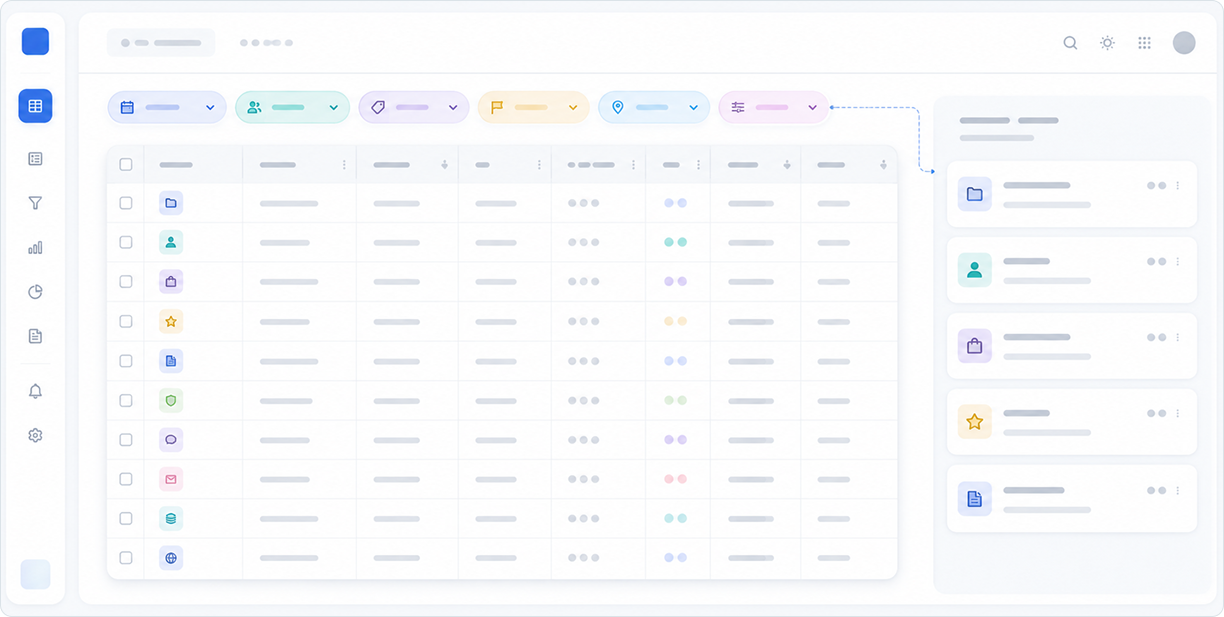
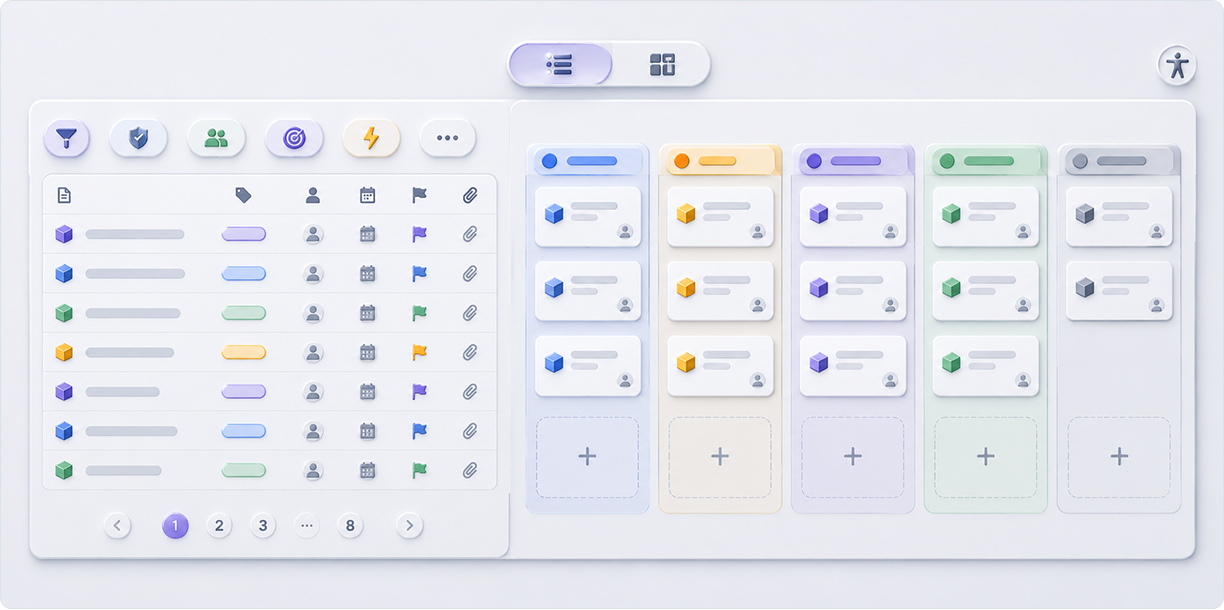
Approved public records
List is the default view for clarity and accessibility. The board groups by status, never by an arbitrary time horizon. Sorting by popularity or hidden priority is not offered.
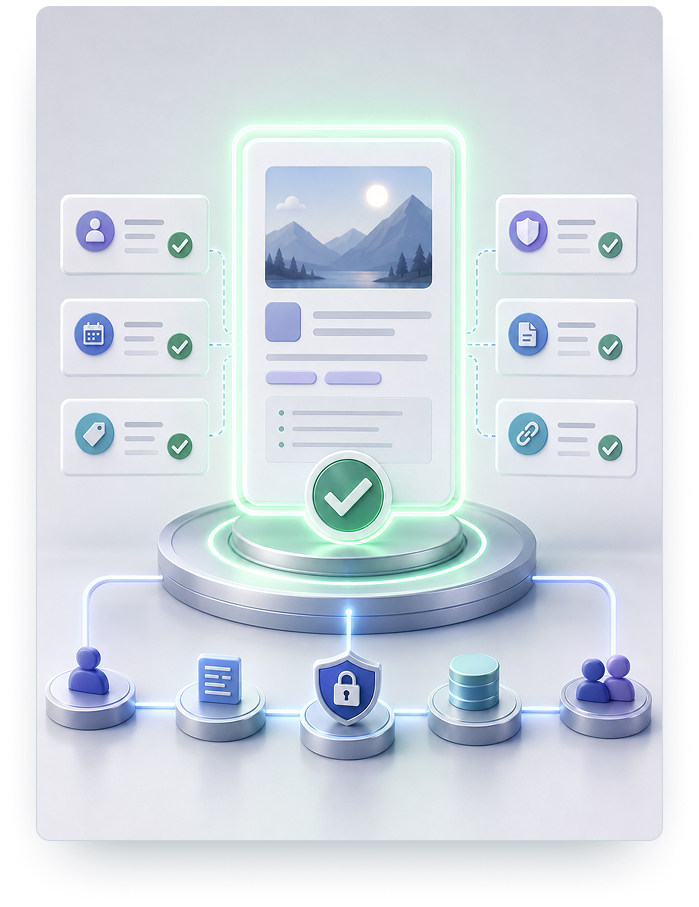
What a record must contain before it can be published
A card cannot appear publicly unless every required field is present, approved, and internally consistent.
Outcome-oriented and specific. No internal code names, no unapproved solution claims.
One approved public status with a link to its definition.
The user or business problem the direction is intended to improve — not a guaranteed result.
Core Module, Governance Platform, Platform Foundation, or cross-platform.
Functions, roles, entities, jurisdictions, deployment models, integrations, or APIs — only where approved.
No public target, a qualified target window, or a released date. A date never appears without status and caveat.
Top three public dependencies plus a count. Security-sensitive details are omitted with an explanation.
"Global" only when verified; otherwise market, plan, deployment, pilot, or configuration qualification.
Last reviewed date, status changed date, and public owner group.
View details, follow theme, submit relevant context — each separately operable.
Nine stages from evidence to released outcome
Select a stage to see its required artifacts, decision owner, and exit criteria. No stage advances automatically or on a score alone.
Capture
Structured problem, affected workflow, evidence source, users, business impact, regions, dependencies, confidentiality.
Triage
Duplicate and theme mapping, security and privacy classification, support impact, strategic relevance, evidence sufficiency.
Discovery
User research, workflow analysis, authoritative data, object model, policies, jurisdiction and current-system constraints.
Validation
Problem and outcome validation, strategic fit, architecture feasibility, risk, accessibility, implementation and operational evidence.
Design
UX, data, control, API and event, permission, evidence, localization, migration and support requirements.
Build and verify
Implementation, testing, security, privacy, accessibility, performance, migration, documentation and observability.
Controlled availability
Pilot or limited release with entry criteria, consent or contract, support, metrics, rollback and exit decision.
Release
Approved availability, release notes, documentation, support readiness, admin actions, migration and public history.
Post-release review
Adoption, quality, incidents, accessibility, support, evidence, deprecation and improvement review.
- •Structured problem statement
- •Named evidence source
- •Affected workflow and users
- •Confidentiality classification
Product intake owner, with security and privacy classification support.
- •Problem is understood and not a duplicate
- •Evidence source is identified and attributable
- •Confidentiality level is assigned
Technical direction, separated from current interfaces
Approved direction is not a released interface. Confidential partner work does not appear here at all.

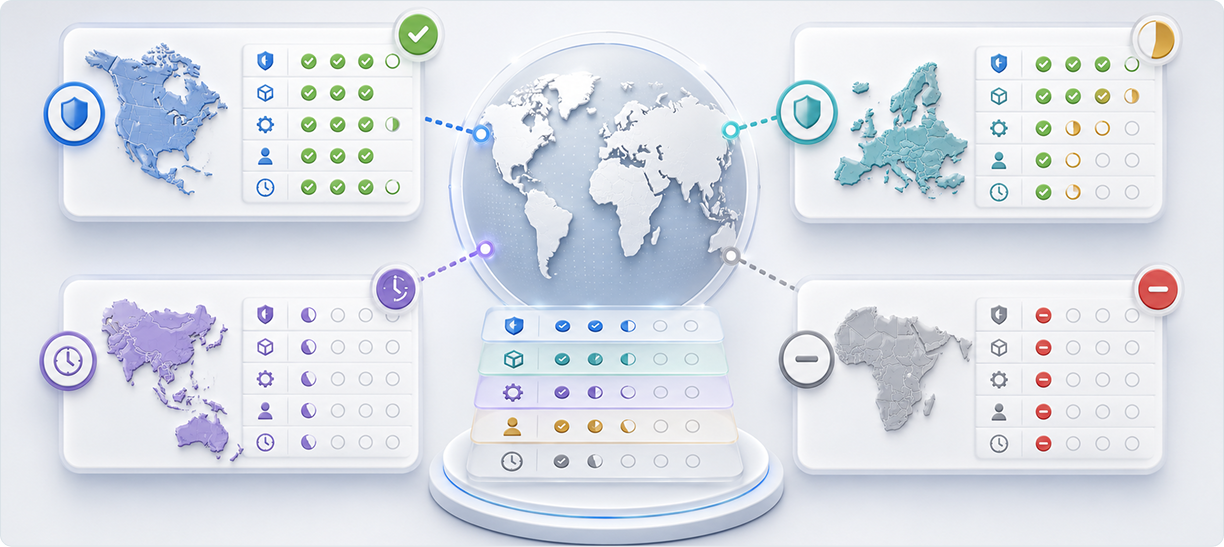
A roadmap record is not a coverage claim
Direction in one market does not imply availability in another. Every scope dimension is qualified separately.
Controlled validation — not general availability
Early access is limited, may change, may be withdrawn, and does not guarantee graduation to a released capability.
What qualifies a participant
Organization fit · use case · region and deployment · technical readiness · data, privacy, and security review · implementation capacity · feedback agreement · contract or terms where required.
What we ask of you
A named owner · an approved environment · testing · issue reporting · feedback · tolerance for change · operational support contacts.
What we owe you
Defined scope · documentation · a support route · telemetry and privacy disclosure · issue handling · change notice · exit and rollback terms.
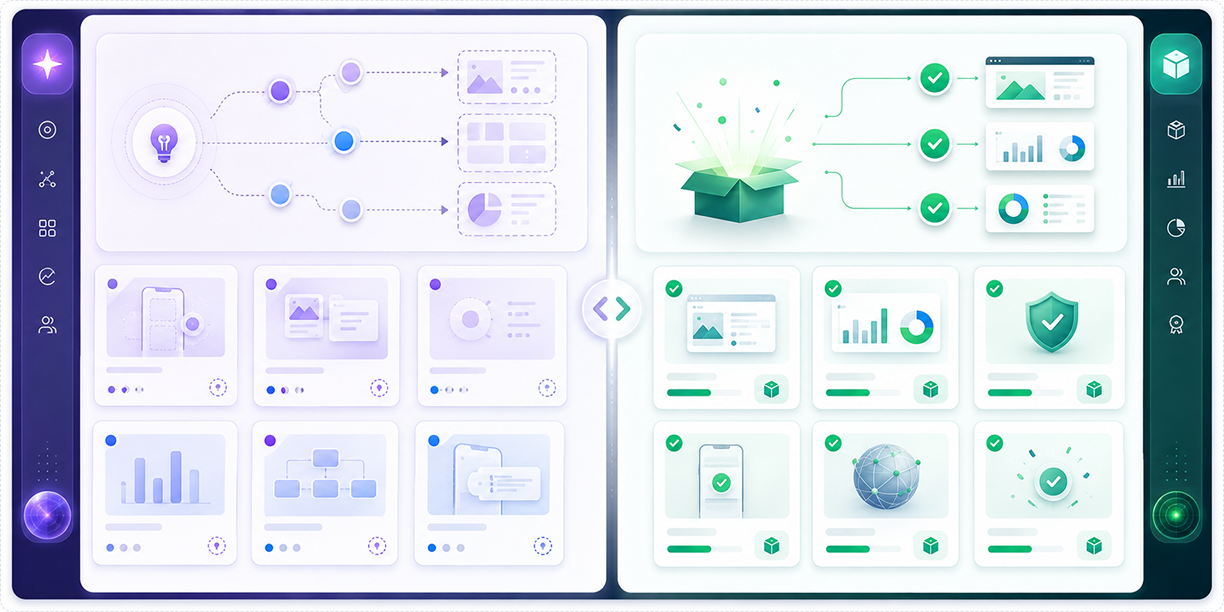
Shipped capability lives in a separate archive
Future direction and released outcomes are never mixed in one list, visually or semantically.
Accountable change without misleading detail
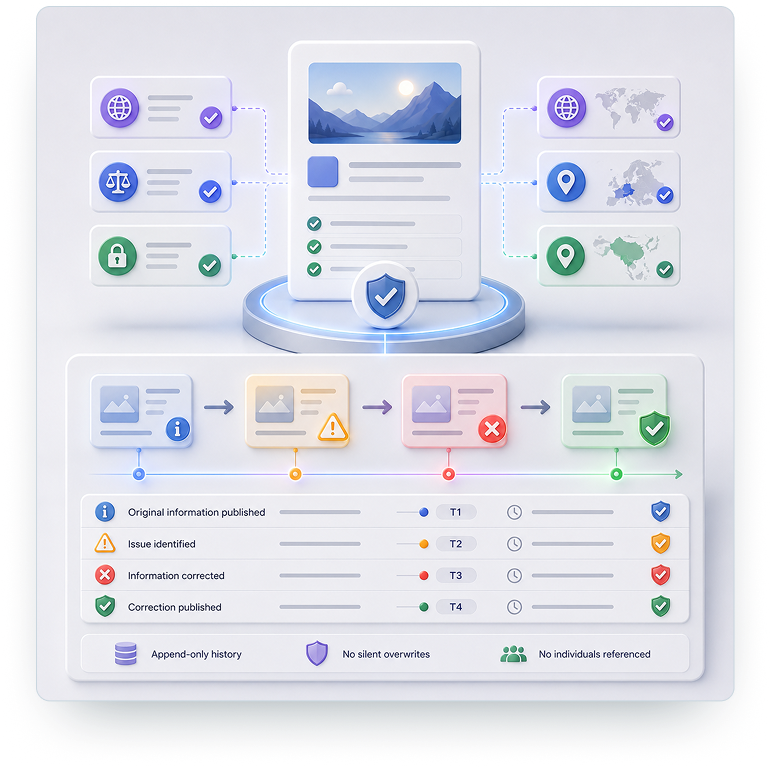
Incorrect public information is corrected by an appended history event — never silently overwritten. No employee, partner, or customer is named as a cause.
A correction appends a new dated entry describing what was wrong and what is now accurate. The original entry remains visible. Corrections are never applied by editing history in place or by strikethrough alone.
Choose exactly what you receive
The record title, a change summary, the current status, the applicable qualification, the date, and a link. Nothing else — no promotional content bundled into a roadmap update.
You will not be notified about internal-only work, unapproved records, or trivial editorial changes. Material status, scope, and target changes only.
A business email address or your authenticated preference centre. There is no hidden cross-site profiling behind this form.

What governs your entitlement — and what does not
Roadmap content is not a contractual document. Current availability and commitments are governed by approved documentation and your agreement.
Your applicable agreement, order form, and approved documentation govern what your organization is entitled to. Nothing on this page modifies them, and no ZoikoSuite representative can commit a roadmap item outside that process.
Discuss what ZoikoSuite can do for you today
The most useful conversation starts from current capability, not from future direction. Bring the workflow you need governed and we will be explicit about what exists now, what is in a pilot, and what is not available.
A demo covers capability available today. It is not a commitment to any roadmap record.

Timing, commitment, voting, and access
Direct first sentences, then qualified detail. Every answer is present in the page source.
No. The roadmap communicates approved public direction and may change; current availability and commitments are governed by approved documentation and agreements.
Nothing on this page creates an entitlement, a warranty, or a contractual obligation, and it should not be relied upon in making a purchasing decision. Read the forward-looking statement
Govern your global operations with confidence
Unify finance, workforce, legal, tax, compliance, and commercial operations under one governed platform.